Psychology Master’s Student Wins Autism Scholars Award
By Ellen Tsaprailis
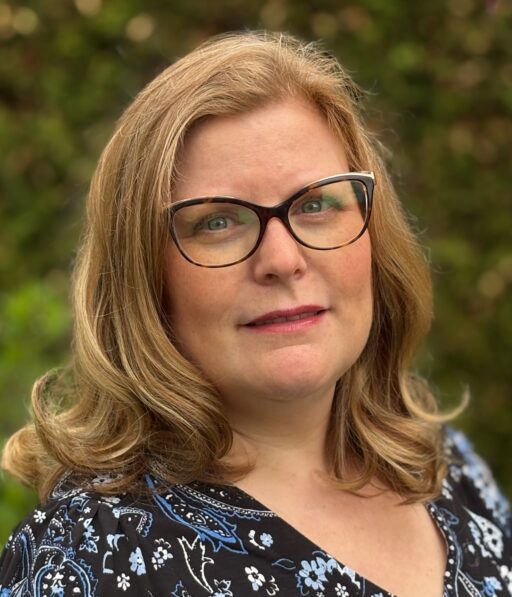
Jennifer Crookshank has won a 2025 Autism Scholars Award from the Council of Ontario Universities.
The master’s student in Psychology was one of five graduate students chosen for the distinguished award.
“I am thrilled and honoured, to receive this award,” says Crookshank. “I was speechless when I opened the email! Ontario has some very strong researchers in this area, so it’s humbling to get this recognition.”
After earning her Bachelor of Science in 1999 and her Master of Science in 2001, Crookshank spent 18 years working in the biological sciences. In 2004, Crookshank became a parent to a child with autism and, despite being engaged and having positive relationships with her child’s schools, encountered challenges within the education system as the years went by. These challenges motivated her to pursue researching this area and returning to university was a means to garner the appropriate qualifications. She graduated with a Bachelor of Science in Psychology at Carleton in 2023 and is now working towards a master’s degree.
Autism is a neurodevelopmental condition. Crookshank explains that children and adults with autism often have challenges with social communication and display restricted and repetitive behaviours or intense-focused interests that can affect their experience at school.
“A lot of children on the spectrum have challenges at school. They are more likely to experience school absenteeism than neurotypical children,” says Crookshank. “My project is looking at what are the risk factors for children to engage in school avoidance behaviours.
“Children can be absent for different reasons. The occasional absence for an appointment or illness is generally not considered to be a problem. However, when they are absent from school for a longer period or because they’re experiencing behavioural challenges—because the parents feel that their child’s needs aren’t being met, or because they (the child) are anxious about being at school—it can have a negative impact on their learning and well-being.”
School avoidance behaviours can be difficult when the child is experiencing such significant distress in the school that the parent—despite their best efforts—cannot get them to attend school.
“My research is that specific situation,” says Crookshank. “Children on the spectrum have higher risks or higher rates of school avoidance behaviours than neurotypical children.”
Some of the possible risk factors for school avoidance behaviours include the child’s social skills, communication abilities, inflexible mindsets, and behaviours such as defiance or hyperactivity. Family factors such as income, education level and immigration status are also being considered as well as the kind of supports that are available in current school environments.
Providing options of what parents and school administrators can do, when to intervene and how to intervene to give families support is Crookshank’s goal. Hoping to defend her thesis next summer, she is planning to submit her research to academic journals and present her findings at academic conferences to disseminate the information widely.
Research Accolades
In addition to this scholarship, Crookshank has been awarded a 2025-2026 Canada Graduate Research Scholarship as well as a Data-2-Policy fellowship from the Autism Alliance of Canada.
She is working under the co-supervision of Psychology Professors Vivian Lee and Yan Liu.
“It has been a pleasure and a privilege to supervise Jennifer Crookshank, an exceptional second-year MA student whose lived experience as an autism parent and dedication to autism research has been both inspiring and impactful,” says Lee. “Her research explores the contextual factors that contribute to school avoidance in autistic children, an area with significant implications for Canadians on the spectrum and will inform national educational policy.
“I am incredibly proud of her accomplishments and excited to see where her important work leads.”
Crookshank praises the quality of instruction she has received and feels there is a lot of support within Carleton’s Department of Psychology.
“The professors and the staff are invested in us as individuals and want to see that we come out of this with the best education we can,” says Crookshank.
“I am exactly where I want to be with this degree. For me, this is a highly personal area, and I feel so lucky to have the opportunity to do this research and contribute to the autism community. We all want the best for our children. The education system can be tricky to navigate when you are a parent of an autistic child so I am really hoping my research will improve outcomes.”
The Autism Scholars Awards Program was established with the support from the Ministry of Colleges and Universities to ensure Ontario continues to promote leading-edge scholarship into autism, which affects one in 50 Canadian children, according to the Public Health Agency of Canada.